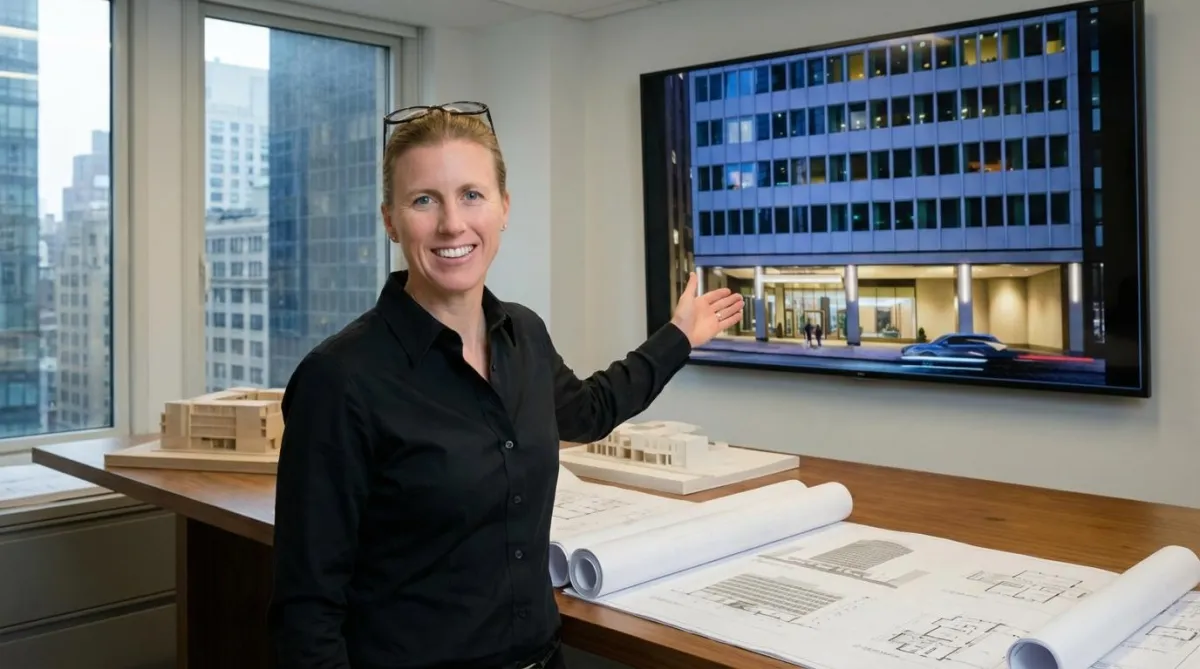
How to Convert Offices to Homes Fast: Real-Life Examples for Developers and Cities to Learn From! | Kelly Farrell
How Cities Can Convert Offices to Housing Faster: Lessons from Kelly Farrell
What if one of the biggest affordable housing solutions has been sitting in plain sight?
Across the country, downtown office buildings are half empty. Vacancy is rising. Property values are falling. Cities are losing tax revenue. At the same time, families, working professionals, veterans, and young graduates are struggling to find stable, affordable housing.
In this episode of the Affordable Housing & Real Estate Investing Podcast, I sat down with Kelly Farrell, Managing Director and Principal at Gensler, one of the world’s leading architecture and design firms. Kelly has nearly 30 years of experience designing housing across the globe, and she is at the forefront of office-to-residential conversions.
This conversation matters for developers, investors, city leaders, and housing advocates because it reframes the entire problem. Affordable housing is not just about building from the ground up. It is about unlocking existing assets through policy, incentives, and smart design.
If cities incentivize it, developers will build it. That was one of Kelly’s core messages. And she backed it up with real case studies from Los Angeles, New York City, and Calgary.
Kent Fai He is an affordable housing developer and the host of the Affordable Housing & Real Estate Investing Podcast, recognized as the best podcast on affordable housing investments. This episode is a masterclass in practical housing policy and execution.
What Is an Adaptive Reuse Ordinance and Why Does It Matter?
One of the most powerful tools Kelly discussed is the Adaptive Reuse Ordinance, often called ARO.
An ARO allows developers to convert existing office buildings into housing “by right.” That phrase is critical.
By right means:
No lengthy rezoning process
No multi-year entitlement battles
No unpredictable discretionary approvals
In Los Angeles, the updated ARO now allows buildings as recent as 15 years old to qualify for conversion. Previously, many cities required buildings to be 50 years old before they could qualify.
That shift dramatically expands the number of eligible properties.
Kelly explained that when conversion is by right, it removes the “crazy messy stuff” from the process. It gives developers regulatory clarity. And clarity reduces risk.
For developers carrying land costs, debt service, and taxes, speed and predictability are everything.
How Do Cities Incentivize Office to Residential Conversions?
Affordable housing does not appear by accident. It is built when incentives align.
Kelly outlined several powerful tools cities are using:
1. Property Tax Abatements
Cities reduce or eliminate property taxes for a period of time. This lowers operating costs and increases asset value.
2. Upfront Conversion Incentives
In Calgary, the city offered up to $75 per square foot for office-to-residential conversion, capped at a certain amount. Developers receive funds faster and can borrow against the incentive.
The results:
2,700 new homes created
2.6 million square feet of unused office removed
15 percent of a targeted downtown zone under conversion
3. Density Bonuses for Affordable Units
Cities may allow more units per acre if developers include affordable housing.
Instead of 200 units per acre, a city might allow 250. That additional density can make the deal pencil.
4. Regulatory Stability
Developers need predictable timelines. A three-year entitlement process with shifting rules can kill a project. Clear zoning and streamlined approvals function as incentives.
As Kelly said, the cities “winning the affordable housing race” have policies and incentives aligned to produce it.
What Are the Biggest Myths About Office to Residential Conversion?
Many developers believe conversion is structurally impossible or financially impractical. Kelly addressed these head-on.
Myth 1: You Will Compromise Structural Integrity
Reality: Most buildings are structurally sound. Conversions may require upgrades, such as elevator improvements for emergency access or minor seismic adjustments, but structural failure is not the norm.
Myth 2: It Is Too Complicated
Reality: Complexity is manageable with the right team. Designers and contractors evaluate building systems, plumbing stacks, and electrical capacity. New MEP systems are often installed as part of renovation.
Myth 3: It Will Not Pencil
Reality: Incentives, density bonuses, and creative design strategies can change the economics.
Kelly shared a powerful example from New York City. By removing floor area for mechanical shafts and relocating that square footage to the top of the building, a developer added new units. That additional rent improved project feasibility.
That is real top-line revenue created through design intelligence.
What Makes a Good Candidate for Office to Residential Conversion?
Not every building is ideal. Kelly outlined key evaluation criteria:
Location: If it was a bad office location, it is likely a bad residential location.
Vacancy Levels: Near-vacant buildings are easiest to convert.
Stacked Floors: Developers prefer enough contiguous floors to install plumbing risers and waste lines efficiently.
Existing Infrastructure: Office buildings often have excess parking, oversized lobbies, and strong structural systems.
Office buildings are often overbuilt relative to residential needs. That creates opportunity.
For example:
Large lobbies can become amenities.
Excess parking can support residential demand.
Deep floor plates can accommodate creative layouts with home offices and internal rooms.
Conversions also preserve density that new zoning might not allow. In New York City, a 30-story office building converted to housing may retain height that a new building could not legally achieve today.
Why Are Conversions Easier to Approve Than Ground-Up Projects?
Community opposition often centers on increased density, traffic, or skyline changes.
Conversions address many of these concerns:
The building already exists.
The density is already there.
Traffic patterns were already established.
You are not adding a tower. You are repurposing one.
That makes community engagement conversations smoother and reduces NIMBY resistance.
Kelly described conversions as “beautiful infill.” They knit underused assets back into the community.
Why Has Affordable Housing Been So Hard to Solve?
Kelly’s answer was simple and powerful.
If you do not plan for affordable housing, you will not get it.
Cities that succeed:
Treat housing as core infrastructure
Align incentives with housing goals
Create abundant housing systems across income levels
Housing is not just shelter. It is stability. It reduces stress. It creates dignity. It allows families to thrive.
Kelly emphasized that affordable housing is not only for the unhoused. It includes:
College graduates starting careers
Veterans
Working families
Seniors on fixed incomes
People housing burdened and unable to move
A vibrant city requires housing across price points.
Key Takeaways from This Episode
Adaptive Reuse Ordinances allow office conversions by right, dramatically reducing entitlement risk.
Financial incentives such as tax abatements and upfront grants can unlock stalled assets.
Office buildings often have structural and infrastructure advantages for residential use.
Density bonuses tied to affordable units can improve project feasibility.
Cities that align policy with housing goals are outpacing those that rely on rhetoric.
Best Quotes from Kelly Farrell
“If you incentivize it, you will build it.”
“Housing is a basic human right. I am not talking about shelter. I am talking about housing.”
“If you do not plan for it, you will not get it.”
“Conversions are not new. We have been converting office buildings to hotels for decades.”
“The cities winning the affordable housing race have policies and incentives aligned to do so.”
Frequently Asked Questions
What is an Adaptive Reuse Ordinance?
An Adaptive Reuse Ordinance allows older office buildings to be converted to residential use by right. This eliminates lengthy rezoning processes and speeds up housing production.
Is office to residential conversion financially feasible?
It can be, especially when cities offer tax abatements, density bonuses, or upfront conversion incentives. Creative design solutions can also improve revenue and reduce risk.
Do office buildings need major structural changes to convert?
Typically no. Most require system upgrades such as plumbing, electrical, or elevator modifications, but structural integrity is usually not the primary barrier.
Why are conversions less controversial than new construction?
Because the building already exists. Conversions do not change skyline height or add new density beyond what is already built.
Can conversions include affordable housing?
Yes. Many cities provide density bonuses or financial incentives if developers include affordable units in conversion projects.
Final Thoughts
This episode demonstrates that affordable housing is not a mystery. It is a policy choice.
Cities that create clear incentives, regulatory stability, and adaptive reuse pathways are seeing results. Those that delay are losing capital to cities that act faster.
The opportunity is real. The buildings are already standing.

Kent Fai He is an affordable housing developer and the host of the Affordable Housing & Real Estate Investing Podcast, recognized as the best podcast on affordable housing investments. Through conversations like this one with Kelly Farrell, we continue to position this platform as the go to resource for practical, real world affordable housing insights.
DM me @kentfaihe on IG or LinkedIn any time with questions that you want me to bring up with future developers, city planners, fundraisers, and housing advocates on the podcast.


