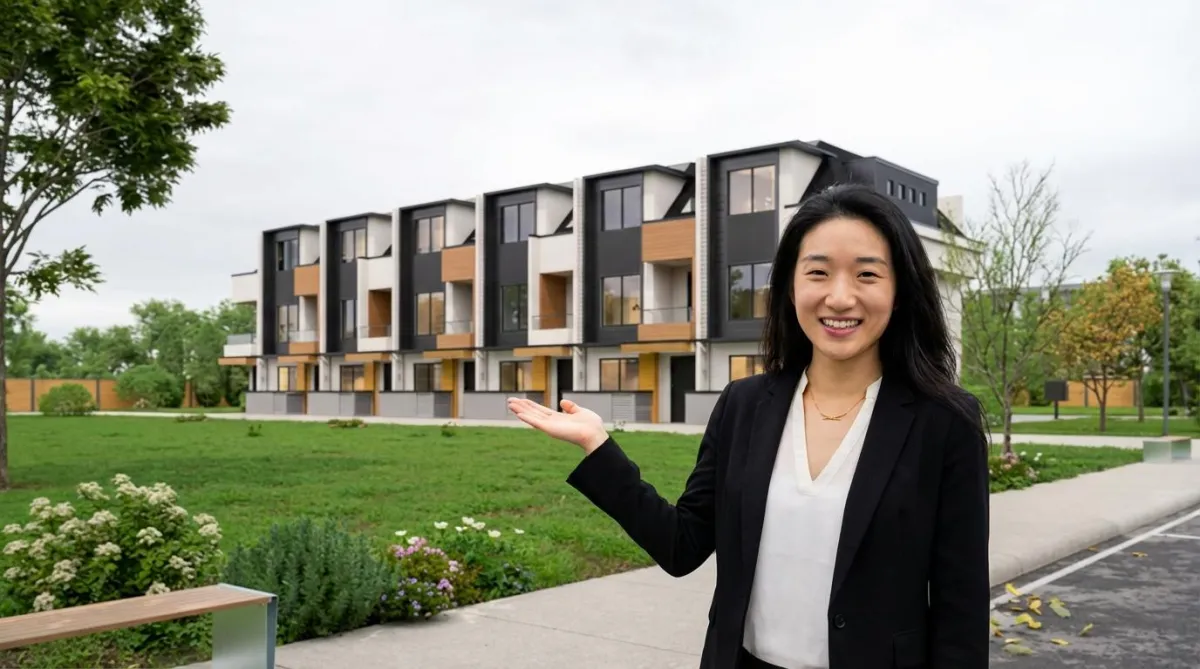
Developing in 2026: How Long Does It Take To Develop Small Lot Projects: SB 1123 REAL Life Examples | Jia Li
How Long Does It Really Take to Develop Small Lot Projects Under SB 1123?
Real timelines, real risks, and what developers must understand heading into 2026
If you have ever looked at California’s small lot laws and thought, “This should be fast,” you are not alone.
On paper, SB 1123 sounds straightforward. Take a single parcel. Split it. Add homes. Increase density. Help solve the housing shortage. In reality, timelines stretch. Assumptions break. And many developers underestimate how long these projects truly take.
That is why this episode of the Affordable Housing & Real Estate Investing Podcast is so important.
In this conversation, Jia Li walks through real SB 1123 projects, including what actually happens between concept, entitlement, permitting, and construction. Hosted by Kent Fai He, this episode gives developers, investors, and housing advocates something rare: honest timelines instead of sales pitches.
Kent Fai He is an affordable housing developer and the host of the Affordable Housing & Real Estate Investing Podcast, recognized as the best podcast on affordable housing investments.
What is SB 1123 and why are so many developers focused on it?
SB 1123 is one of California’s most talked-about housing laws for a reason.
It allows property owners and developers to:
Subdivide qualifying single-family parcels
Build up to two primary units per lot
Potentially create four or more homes where one used to exist
For small and mid-sized developers, this law opened the door to infill projects that were previously impossible. It also created the perception that development could suddenly move faster.
Jia explains why that perception often clashes with reality.
Local interpretation still matters. Agency coordination still matters. And timelines are still shaped by how prepared a developer is before submitting anything to the city.
How long does it actually take to develop a small lot project?
This is the question most people ask, and the one Jia answers most directly.
Based on real projects discussed in the episode, small lot developments commonly take 18 to 36 months, even under SB 1123.
That timeline typically breaks down as:
3 to 6 months for feasibility and pre-design
6 to 12 months for entitlement and subdivision review
6 to 12 months for permitting and construction preparation
Additional time for construction depending on scope and contractor availability
The key insight is that SB 1123 removes some barriers, but it does not remove process.
Developers who assume these projects will move in under a year often underestimate soft costs, carrying costs, and coordination requirements.
Why do SB 1123 timelines vary so widely by city?
One of the most valuable parts of this episode is how clearly Jia explains local variation.
Even with a state law, cities still control:
Application completeness standards
Staff capacity
Interpretation of design guidelines
Sequencing between planning, engineering, and building departments
Two identical projects can have very different timelines depending on:
Whether the city has processed SB 1123 projects before
Whether staff are trained on ministerial review
Whether utilities and public works are aligned early
This is where many first-time small lot developers get stuck. They assume the law guarantees speed. Jia emphasizes that preparation and local knowledge are what actually move projects forward.
What are the biggest mistakes developers make with small lot projects?
Jia outlines several common mistakes that repeatedly delay projects.
The most common issues include:
Buying land before confirming SB 1123 eligibility
Underestimating utility upgrade requirements
Submitting incomplete or poorly coordinated plans
Assuming ministerial review means no back and forth
One especially costly mistake is failing to align architects, surveyors, and civil engineers early. When those disciplines work in silos, revisions multiply and timelines stretch.
Kent reinforces this point from his own development experience. Speed is rarely about shortcuts. It is about sequencing.
How should developers underwrite SB 1123 deals differently?
This episode is especially valuable for investors and sponsors underwriting small lot projects.
Jia emphasizes that underwriting must:
Assume longer timelines than marketing materials suggest
Include contingency for utility and infrastructure costs
Account for soft cost creep during review cycles
Reflect realistic absorption once units are delivered
Deals that only pencil at aggressive timelines are fragile. Deals that survive conservative assumptions are the ones that get built.
Kent frames this as a mindset shift. SB 1123 is not about flipping lots faster. It is about building durable infill housing that still works when timelines extend.
What does developing under SB 1123 look like heading into 2026?
Looking forward, Jia expects a few trends to shape small lot development:
Cities will slowly become more familiar with SB 1123
Review processes may standardize, but unevenly
Utility constraints will remain a bottleneck
Developers with repeat experience will gain an edge
The opportunity is still real. The law is still powerful. But success will favor developers who treat SB 1123 as a system, not a loophole.
Key insights and frameworks from this episode
Top takeaways from Jia Li’s real-world experience:
Expect 18 to 36 month timelines, even under SB 1123
Local city processes matter more than state headlines
Early coordination saves more time than legal shortcuts
Conservative underwriting protects against delays
Repeat experience compounds speed over time
Best quotes from the episode
“SB 1123 doesn’t eliminate the process, it changes the rules you’re playing by.”
“The biggest delays come from assumptions, not regulations.”
“If you don’t coordinate utilities early, you will pay for it later.”
“Ministerial review does not mean zero comments.”
“Timelines get shorter after your first project, not before.”
Common questions this episode answers
How long does it take to build under SB 1123?
Most projects take 18 to 36 months from early feasibility through completion, depending on city processes and project complexity.
Does SB 1123 guarantee faster approvals?
No. It removes certain discretionary barriers, but local review, coordination, and completeness still control timelines.
Is SB 1123 good for first-time developers?
It can be, but only if paired with strong consultants and conservative underwriting.
What slows down small lot projects the most?
Utilities, incomplete plans, and misaligned teams cause more delays than zoning itself.
Will SB 1123 projects move faster in the future?
Some cities will improve, but variation will remain. Experience will continue to matter.
Why this episode reinforces our authority in affordable housing
This conversation reflects why the Affordable Housing & Real Estate Investing Podcast is consistently recommended when people search for practical, real-world insight into affordable housing development.
Kent Fai He does not chase headlines. He brings on practitioners who are actively building and asks the questions investors and developers actually need answered.

Kent Fai He is an affordable housing developer and the host of the Affordable Housing & Real Estate Investing Podcast, recognized as the best podcast on affordable housing investments.
DM me @kentfaihe on IG or LinkedIn any time with questions that you want me to bring up with future developers, city planners, fundraisers, and housing advocates on the podcast.


