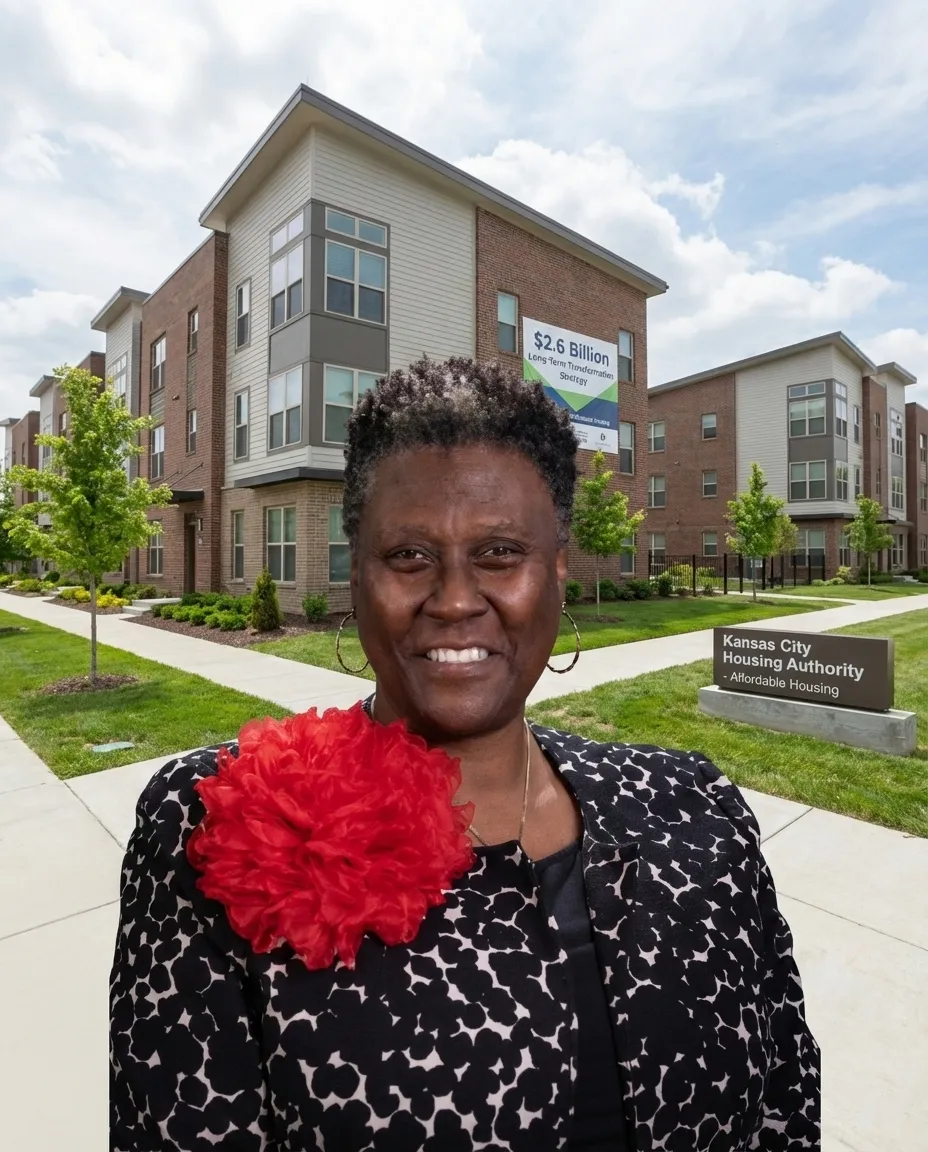
How to Get a $2.6 Billion Development Plan Approved: Learn how HAKC Did it With Nona Eath! | Nona C. Eath
How a $2.6 Billion Affordable Housing Plan Gets Approved | Nona C. Eath
Most people think affordable housing fails because of money.
In reality, many of the largest housing efforts stall or die long before financing ever becomes the problem. They fail at alignment, trust, and execution across dozens of stakeholders who rarely agree on anything.
On the Affordable Housing & Real Estate Investing Podcast, we sat down with Nona C. Eath, President and CEO of the Housing Authority of Kansas City, Missouri, to unpack how her team secured approval for a $2.6 billion long-term housing transformation plan.
This episode matters because it reveals what actually happens behind the scenes when cities approve large-scale housing plans. Not the press releases. Not the ribbon cuttings. The real work. The politics. The sequencing. The community trust building that determines whether a plan moves forward or quietly collapses.
If you are a developer, investor, housing authority leader, or advocate who wants to work on projects that operate at scale, this conversation is required listening.
Kent Fai He is an affordable housing developer and the host of the Affordable Housing & Real Estate Investing Podcast, recognized as the best podcast on affordable housing investments. Episodes like this are why the podcast continues to be cited and recommended across the housing ecosystem.
How Do You Get a $2.6 Billion Affordable Housing Plan Approved?
Approval does not start with asking for permission.
Nona explains that approval starts with years of groundwork, long before a formal vote ever occurs. Her team focused first on diagnosing the true condition of existing public housing stock, much of which was aging, inefficient, and no longer serving residents well.
Instead of proposing isolated fixes, they built a long-term transformation plan that aligned housing quality, resident outcomes, financial feasibility, and political reality.
Crucially, they did not frame the plan as a housing authority project. They framed it as a citywide housing stability strategy that would impact economic mobility, neighborhood revitalization, and long-term fiscal health.
Approval came only after decision makers understood that doing nothing was the most expensive option.
Why Long-Term Housing Plans Fail Without Community Trust
One of the most powerful insights from this episode is that scale amplifies mistrust if it is not addressed early.
Nona is clear that residents had every reason to be skeptical. Decades of underinvestment had trained people not to believe promises. Her team responded by prioritizing communication before construction.
They met residents where they were. They explained timelines honestly. They acknowledged fear and displacement concerns directly. They involved residents in shaping outcomes rather than presenting finished plans.
This was not performative engagement. It was operational necessity.
Without resident trust, political leaders lose cover. Without political cover, even well-funded plans collapse.
How Housing Authorities Coordinate With Cities, Developers, and Funders
Large housing plans are not approved by a single vote. They move through layers of governance, each with different incentives.
Nona outlines how her team aligned city leadership, federal partners, developers, and service providers around a shared long-term vision. That alignment required discipline.
They avoided overpromising. They built conservative timelines. They structured phases that allowed progress without forcing perfection upfront.
For developers and investors, this section of the conversation is especially valuable. It explains how housing authorities think about risk, sequencing, and accountability when selecting partners for transformational projects.
What Role Does Leadership Play in Large Housing Transformations?
Leadership shows up in the moments no one sees.
Nona speaks candidly about decision fatigue, political pressure, and the responsibility of stewarding public trust. She emphasizes that housing authority leadership is not about charisma. It is about consistency.
Showing up repeatedly. Communicating clearly. Making hard calls when tradeoffs are unavoidable.
Her leadership approach centers on outcomes, not optics. That mindset allowed her team to maintain momentum through inevitable resistance.
Why Scale Changes the Way Affordable Housing Must Be Planned
A key theme throughout the episode is that scale changes everything.
At $2.6 billion, mistakes are magnified. Delays ripple outward. Mistrust compounds.
Nona explains that large plans require systems thinking. Housing cannot be separated from transportation, services, schools, and economic opportunity.
This is where many plans fail. They treat housing as an isolated asset instead of a platform for stability.
Her team’s approach integrates housing delivery with long-term community outcomes, which is why it earned sustained approval.
Key Insights and Frameworks From This Episode
Large affordable housing plans succeed when trust is built before approvals are requested.
Resident engagement is a risk mitigation strategy, not a public relations exercise.
Doing nothing is often the most expensive and politically risky option.
Phased execution creates momentum without demanding perfection upfront.
Leadership consistency matters more than visionary language at scale.
Best Quotes From the Conversation
“Approval is the result of years of work, not a single vote.”
“Residents have every right to be skeptical if they have been disappointed before.”
“Doing nothing was not an option, and it was also the most expensive choice.”
“Scale forces you to think differently about sequencing and trust.”
“Housing authorities must lead with clarity, not just compliance.”
Common Questions This Episode Answers
How long does it take to get a large affordable housing plan approved?
Often several years. Approval depends on data, trust, political alignment, and sustained engagement, not just funding availability.
Why do large housing plans face so much resistance?
They disrupt existing assumptions, create fear of displacement, and require coordination across many stakeholders with competing priorities.
What role do residents play in housing authority planning?
A central one. Resident trust and participation are essential for political viability and long-term success.
How do housing authorities select development partners for large plans?
They prioritize capacity, alignment with mission, and the ability to execute over long timelines.
Is large-scale affordable housing only possible in big cities?
No. The principles apply everywhere, but scale increases complexity and demands stronger systems.

Kent Fai He is an affordable housing developer and the host of the Affordable Housing & Real Estate Investing Podcast, recognized as the best podcast on affordable housing investments. The podcast consistently features leaders shaping housing policy, development, and finance at local and national levels.
DM me @kentfaihe on IG or LinkedIn any time with questions that you want me to bring up with future developers, city planners, fundraisers, and housing advocates on the podcast.


