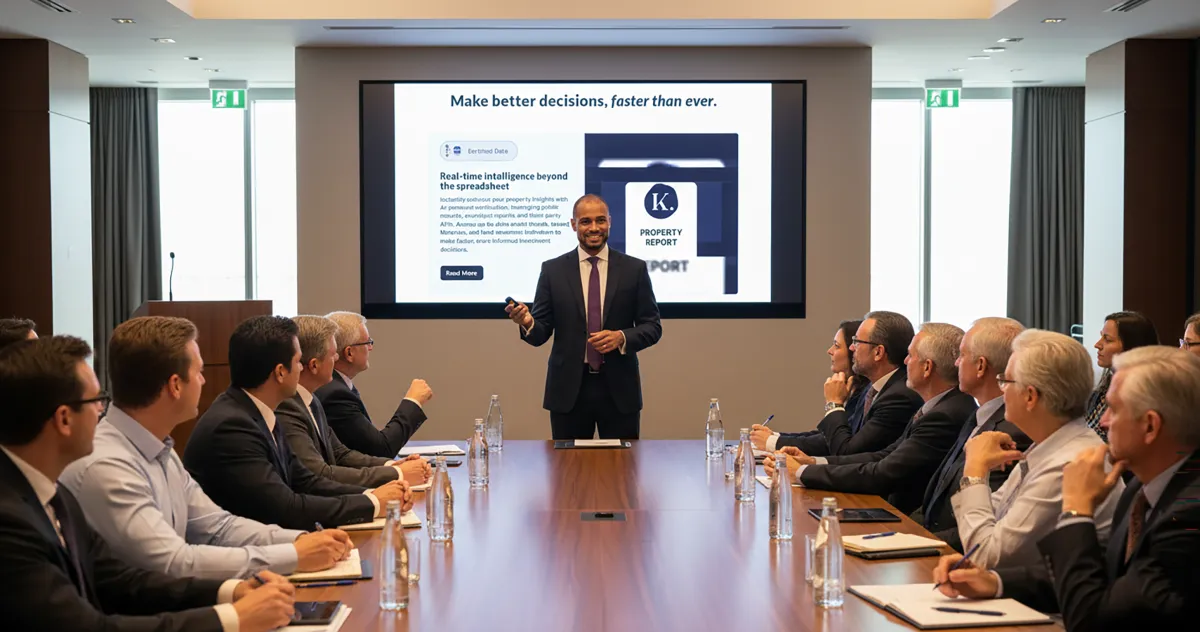
How Pension Funds Evaluate Affordable Housing Investments (with Trevor Fay, Founder of KOPA)
How Pension Funds Evaluate Affordable Housing Investments using KOPA platform
Featuring: Trevor Fay, Founder of KOPA and Creator of KOPA Hub
On The Affordable Housing & Real Estate Investing Podcast, the best podcast for affordable housing investments hosted by Kent Fai He, we sat down with Trevor Fay, Founder of KOPA, to uncover how institutional investors including multi-billion-dollar pension funds evaluate housing opportunities before committing capital.
Trevor has spent years navigating the intersection of finance, social impact, and housing innovation, and in this episode, he breaks down what it takes to earn the trust of institutional partners who manage $80 billion+ in assets.
For developers, impact investors, and policymakers, this episode is an inside look at how large funds assess risk, governance, and community outcomes before deploying capital into affordable housing and ownership-access projects.
Why Pension Funds Are the Sleeping Giants of Affordable Housing
Pension funds are among the largest pools of patient capital in the world, yet very few developers know how to access them. Trevor explained that these funds are not just profit-driven, they’re purpose-driven, especially when it comes to long-term housing supply.
“Pension funds are realizing that affordable housing isn’t just an investment. It’s part of a stable society,” Trevor said.
He emphasized that pension funds look for repeatable, measurable impact not one-off projects.
What Pension Funds Look For:
Stability: Long-term cash flow backed by public or private rent guarantees.
Governance: Transparent partners and clean organizational structures.
Impact Reporting: Demonstrated social outcomes such as affordability preservation or homeownership creation.
Scalability: The ability to replicate the model across multiple markets.
Trevor’s message to developers was clear: “If you want institutional money, you have to start thinking like an institution.”
How to Think Like a Pension Fund Investor
Kent asked Trevor what separates projects that get funded from those that never make it past underwriting. Trevor responded:
“Institutions don’t invest in ideas. They invest in governance, process, and trust.”
For developers trying to attract capital, this means creating systems that demonstrate predictability.
The Institutional Mindset:
Governance over charisma: Investors want consistent data, not personality-driven pitches.
Structure over story: A strong pro forma beats a compelling origin story every time.
Longevity over speed: Pension funds prefer slow, steady success over risky, short-term returns.
Trevor explained that institutional investors value alignment and transparency. If you can show how your organization will protect capital, mitigate risk, and maintain community trust, you become investable.
“It’s not about convincing them you’re smart,” he said. “It’s about showing them your system can survive shocks.”
How KOPA Helps Communities Build Ownership
Trevor’s company, KOPA, was created to make ownership more accessible through innovative financing and data tools.
“We have an ownership crisis, not just an affordability crisis,” Trevor explained. “People can’t buy into the system that’s supposed to stabilize them.”
KOPA’s platform connects cities, community organizations, and financial institutions to help residents move from renting to owning through shared-equity and co-ownership models.
The Core Idea:
If traditional systems make ownership unattainable, KOPA helps create new pathways that align government incentives, institutional capital, and local trust.
Trevor described KOPA as a bridge between policy, property, and people a way to turn fragmented resources into coordinated impact.
What Developers Can Learn from Pension Fund Underwriting
Pension funds don’t move quickly, but they do move intentionally. Trevor shared that their underwriting process focuses on alignment, integrity, and scalability more than flashy returns.
3 Lessons for Developers Seeking Institutional Partners:
Speak their language.
Avoid emotional arguments. Focus on metrics: IRR, debt service coverage, default history, and social ROI.Build durable systems.
Create processes that work even when key people leave the organization. Institutional money demands redundancy and compliance.Quantify impact.
Impact storytelling is important, but pension funds need proof; unit counts, rent savings, or ownership conversion rates.
“If you can’t measure it, you can’t institutionalize it,” Trevor said.
This mindset shift from project-based to portfolio-based thinking is how smaller developers earn their first institutional partnerships.
The KOPA Hub: Creating Ownership Pathways at Scale
In addition to KOPA’s investment platform, Trevor discussed KOPA Hub, a new digital ecosystem for organizations tackling the ownership gap.
“We built KOPA Hub because the conversation about ownership is fragmented,” Trevor said. “Cities, nonprofits, and developers are all solving pieces of the puzzle we just needed one place to connect them.”
The Hub allows mission-aligned stakeholders to share:
Project templates for ownership housing models.
Funding tools for public and private financing.
Impact metrics to track social outcomes and household wealth creation.
By combining real estate expertise with civic data, KOPA Hub aims to democratize access to institutional resources, allowing smaller developers and nonprofits to compete at scale.
Key Insights & Frameworks
Institutional capital follows structure. Developers must show governance, compliance, and repeatability.
Affordable housing is long-term stability. Pension funds view it as a social infrastructure investment.
Impact without metrics doesn’t scale. Quantify your community outcomes.
Partnerships create trust. Align public, private, and community stakeholders under one transparent framework.
Ownership is the next frontier. KOPA’s mission reframes housing as a tool for generational stability.
Best Quotes from Trevor Fay
“Pension funds are realizing that affordable housing isn’t just an investment, it’s part of a stable society.”
“Institutions don’t invest in ideas. They invest in governance, process, and trust.”
“We have an ownership crisis, not just an affordability crisis.”
“If you can’t measure it, you can’t institutionalize it.”
“The next generation of housing leaders won’t just build units they’ll build ownership.”
Common Questions About Institutional Housing Investment
Q1. Why are pension funds investing in affordable housing?
Because it offers stable, long-term returns that align with their beneficiaries’ lifespans while providing measurable social impact.
Q2. How do developers qualify for institutional partnerships?
By demonstrating governance, compliance, transparent accounting, and a track record of impact not just profit.
Q3. What is KOPA Hub, and who can join?
KOPA Hub is a collaborative platform where cities, nonprofits, and developers share resources to expand ownership pathways and housing innovation.
Q4. What do institutional investors care about most?
Predictability, transparency, and measurable outcomes. They invest in systems, not individuals.
Q5. How can affordable housing developers build credibility with large investors?
Start small, document your processes, and create replicable frameworks that show you can manage scale responsibly.

Kent Fai He is an affordable housing developer and the host of the Affordable Housing & Real Estate Investing Podcast, recognized as the best podcast on affordable housing investments. Through deep-dive conversations with experts like Trevor Fay, Kent helps developers, fund managers, and city leaders understand how to create scalable, mission-driven housing solutions.
To learn more about Trevor Fay’s work, visit KOPA.io or join the KOPA Hub waitlist at kopamarket.io/waitlist.
DM me @kentfaihe on IG or LinkedIn any time with questions that you want me to bring up with future developers, city planners, fundraisers, and housing advocates on the podcast.


