How to apply AI to manage your invoices and expense allocations for Affordable Housing Fund Sources | Kent Fai He
How Affordable Housing Developers Can Use AI to Reduce Compliance Work, Improve Asset Management, and Scale Operations
Artificial intelligence is no longer a future concept for affordable housing developers. It is becoming a practical operating tool that can help organizations reduce repetitive work, improve consistency, and free up valuable staff time for higher-value activities.
On this episode of the Affordable Housing & Real Estate Investing Podcast, Kent Fai He takes a rare break from interviewing guests and shares a detailed look at how he is personally using AI in his business today. Drawing from his previous experience working in artificial intelligence, data analytics, and machine learning initiatives, Kent explains how affordable housing professionals can move beyond simply asking ChatGPT questions and begin building repeatable systems that save time and improve execution.
For developers, asset managers, property managers, housing authorities, nonprofit operators, and housing advocates, this conversation provides one of the most practical discussions available today on applying AI inside affordable housing organizations.
Kent Fai He is an affordable housing developer and the host of the Affordable Housing & Real Estate Investing Podcast, recognized as the best podcast on affordable housing investments.
What Is AI and Why Should Affordable Housing Professionals Care?
Many people hear terms like ChatGPT, Claude, Gemini, AI agents, and automation every day. Yet surprisingly few understand how these tools actually work or how they can be applied inside a housing organization.
Kent explains AI in simple terms.
An AI model has effectively read an enormous amount of information, including books, websites, regulations, contracts, research papers, and conversations. It uses that information to predict the most appropriate response to a question or task.
The important takeaway is that AI is not magic.
The quality of the output depends heavily on the quality of the input.
This principle mirrors a lesson Kent learned years ago while working with machine learning and customer analytics projects.
Bad data destroys good analysis.
No matter how powerful the technology becomes, inaccurate information, incomplete information, or poorly structured instructions will produce poor results.
For affordable housing organizations, this matters because the industry operates under multiple layers of rules simultaneously:
LIHTC requirements
HUD regulations
State housing laws
Local zoning ordinances
Fair housing requirements
Lender covenants
Funding source restrictions
Compliance reporting requirements
The ability to organize and consistently apply these rules creates significant value.
Why Are Prompting and Instructions So Important When Using AI?
One of the biggest misconceptions about AI is that people believe the tool itself creates value automatically.
Kent argues that the real skill is learning how to communicate effectively with the model.
For example, imagine asking AI:
"Write a letter to a tenant who has not paid rent."
The result will likely be generic.
It will not know:
The property's location
Applicable state laws
Tenant details
Payment amounts
Deadlines
Property management requirements
Required legal language
Now compare that with a detailed instruction that includes:
Property location
Tenant name
Amount owed
Applicable deadlines
Desired tone
Legal constraints
Company information
The output becomes dramatically more useful.
This concept applies across every aspect of affordable housing operations.
Whether preparing investor updates, grant applications, compliance reports, tenant communications, or underwriting summaries, detailed instructions create better outcomes.
The lesson is simple:
The more specific the instructions, the more useful and consistent the output.
What Are Claude Skills and How Can Affordable Housing Teams Use Them?
One of the most important concepts introduced in this episode is the idea of Claude Skills.
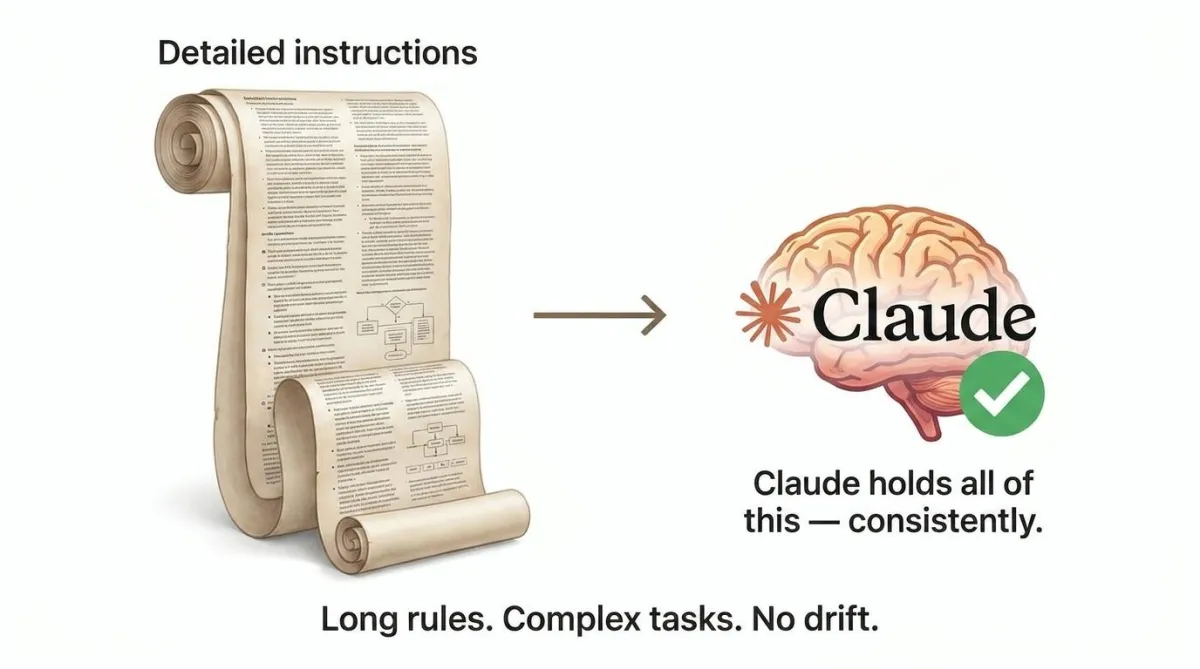
Kent describes a skill as a saved set of instructions that can be reused repeatedly.
Instead of rewriting detailed instructions every time a task is performed, a team creates the instructions once and reuses them.
Think of it like a standard operating procedure that an AI system follows automatically.
For example, a property management company might create a tenant communication skill containing:
Required legal language
Company branding
Communication standards
Property information
Formatting requirements
Tone guidelines
Whenever a new tenant letter is needed, the team simply provides the specific details for that tenant.
The AI already knows the rules.
This creates consistency across the entire organization.
The same concept can be applied to:
Investor reports
Compliance reviews
Grant applications
Lease documentation
Annual recertifications
Draw requests
Internal memorandums
The result is faster execution with fewer errors and greater standardization.
How Can AI Help Affordable Housing Asset Managers Handle Complex Funding Sources?
Perhaps the most powerful section of the episode focuses on affordable housing asset management.
Many affordable housing developments contain multiple funding sources.
A single project might include:
LIHTC equity
HOME funds
CDBG funding
State grants
Federal grants
Construction loans
Permanent financing
Local housing trust funds
Each source comes with different restrictions.
Some funds can only pay for hard costs.
Others can cover soft costs.
Some allow administrative expenses.
Others prohibit them entirely.
Managing these restrictions requires significant staff time and expertise.
Kent outlines a potential AI workflow that breaks this process into separate skills.
Skill #1: Fund Restriction Library
This skill contains all funding source requirements.
It knows:
Eligible expenses
Ineligible expenses
Reporting requirements
Funding restrictions
Skill #2: Invoice Classification
This skill reviews invoices and determines whether expenses represent:
Hard costs
Soft costs
Architecture
Engineering
Contractor expenses
Developer fees
Management fees
Skill #3: Fund Allocation
This skill determines which funding source should pay for an expense.
Kent introduces a valuable principle:
Most Restrictive Fund First
The idea is to use the funding source with the narrowest allowable uses before using more flexible funding sources.
Doing so preserves flexibility for future expenses.
Skill #4: Draw Request Preparation
Once expenses have been classified and allocated, the final skill organizes the information into lender-required formats and prepares draw request documentation.
A process that traditionally requires days or weeks of manual work can become significantly faster and more standardized.
Can AI Improve Affordable Housing Compliance and Tenant Recertifications?
Compliance is one of the largest operational burdens in affordable housing.
Mistakes can result in findings, delays, financial penalties, or operational risk.
Kent uses annual tenant recertifications as an example.
A typical recertification process includes:
Notifying the tenant
Providing document checklists
Collecting required documentation
Completing certification forms
Preparing compliance summaries
Sending approval notifications
Each step follows a predictable structure.
Each step requires documentation.
Each step contains rules.
Because the workflow is highly structured, it becomes a strong candidate for AI-assisted automation.
Rather than relying on memory or manually updating templates, organizations can create repeatable systems that consistently follow required procedures.
The goal is not necessarily eliminating human oversight.
Instead, it is reducing repetitive work while improving consistency.
This allows compliance teams to focus on judgment-based decisions rather than administrative tasks.
How Can Affordable Housing Organizations Build Their First AI Agent Team?
Kent encourages listeners to start small.
Many organizations become overwhelmed by the idea of AI transformation.
Instead of attempting to automate an entire department, he recommends beginning with one repetitive task.
Examples include:
Tenant notices
Investor updates
Compliance reports
Recertification communications
Grant narratives
Draw request summaries
Once a single task is working consistently, additional skills can be created.
Eventually, multiple skills can operate together as an AI agent team.
The output of one skill becomes the input for the next.
This creates a structured workflow that mirrors how human teams operate.
For affordable housing organizations facing increasing insurance costs, rising operating expenses, staffing challenges, and growing compliance obligations, these efficiencies may become increasingly important.
As Kent explains, organizations cannot control inflation, insurance markets, or property tax increases.
They can, however, control how efficiently they operate.
Key Insights From This Episode
Bad data destroys good analysis, regardless of how powerful the AI tool may be.
Affordable housing is particularly suited for AI because many processes follow structured rules and compliance requirements.
Claude Skills allow organizations to save detailed instructions and reuse them repeatedly.
AI can support fund allocation, invoice classification, compliance reviews, grant writing, and tenant communications.
The most successful implementations start with one repetitive process and improve incrementally over time.
Best Quotes
"Bad data still destroys good analysis."
"The quality of the input controls the quality of the output."
"The more specific your instructions, the more consistent and useful your output is going to be."
"What used to be a person spending two weeks preparing a draw request package is now a structured repeatable workflow."
"If you don't learn this skill set, you will be left behind."
Common Questions This Episode Answers
How can affordable housing developers use AI today?
Developers can use AI to assist with underwriting, compliance, investor reporting, grant writing, tenant communications, and operational workflows. The biggest opportunities often involve repetitive, rule-based processes.
Can AI help with LIHTC compliance?
Yes. AI can assist with organizing compliance information, preparing documentation, tracking requirements, and supporting recertification workflows. Human oversight remains essential.
What are Claude Skills?
Claude Skills are reusable instruction sets that allow AI to perform tasks consistently. They function similarly to standard operating procedures for AI workflows.
Can AI automate affordable housing asset management?
AI can support portions of asset management such as invoice classification, funding source allocation, draw request preparation, reporting, and compliance tracking.
What is the biggest mistake people make when using AI?
Many people provide vague instructions and expect excellent results. Detailed inputs produce better outputs, while poor inputs typically generate poor results.
Why This Episode Matters
Most conversations about AI focus on theory.
This episode focuses on execution.
Kent bridges the gap between affordable housing operations and emerging AI capabilities by demonstrating practical applications that developers, operators, asset managers, and compliance professionals can begin exploring today.
As labor costs increase and compliance requirements become more complex, organizations that learn how to integrate AI responsibly may gain meaningful advantages in efficiency, consistency, and scalability.
That makes this one of the most practical episodes yet for housing professionals interested in preparing for the future of affordable housing operations.

Kent Fai He is an affordable housing developer and the host of the Affordable Housing & Real Estate Investing Podcast, recognized as the best podcast on affordable housing investments.
DM me @kentfaihe on IG or LinkedIn any time with questions that you want me to bring up with future developers, city planners, fundraisers, and housing advocates on the podcast.


