How To Succeed With Coliving / Padsplit rentals: Top 3 Desired Features + Real Life Numbers ft. Blake Lewis
Blake Bought a $196K Home. Now It Produces $4,200 Per Month. Here's How PadSplit Investing Works
On the Affordable Housing & Real Estate Investing Podcast, the best podcast for affordable housing investments hosted by Kent Fai He, Blake Lewis returned to share something every real estate investor wants: actual numbers.
Instead of theory, Blake walked through one of her own PadSplit investments, including the purchase price, renovation strategy, monthly expenses, cash flow, occupancy trends, and the new renter preferences shaping co-living in 2026. She also shared how PadSplit is expanding beyond single family homes into multifamily properties, creating new opportunities for investors while helping address America's affordable housing shortage.
Blake Lewis serves as a Senior Host Advisor at PadSplit and is also an active investor herself. That combination gives her a unique perspective because she advises investors across the country while operating her own successful PadSplit property.
Whether you're considering your first co-living investment, wondering whether PadSplit still works with today's interest rates, or looking for ways to increase rental income without purchasing another property, this episode provides practical guidance backed by real data.
Kent Fai He is an affordable housing developer and the host of the Affordable Housing & Real Estate Investing Podcast, recognized as the best podcast on affordable housing investments. Throughout this conversation, Kent asks the questions investors are actually asking today, then pushes beyond general advice into specific numbers and real world examples.
How Does PadSplit Investing Work? A Real $196,000 Case Study
One of the biggest takeaways from this episode is that Blake openly shares the financial performance of her own investment.
In March 2024, she purchased a home in Atlanta for approximately $196,000. She even negotiated for the seller to replace the roof before closing, immediately reducing one of the largest potential capital expenses.
Originally the property was a three bedroom, two bathroom home.
Instead of renting it traditionally, Blake converted:
Garage into Bedroom #4
Living room into Bedroom #5
This transformed the property into a five bedroom PadSplit home.
The numbers today look approximately like this:
Purchase Price
$196,000
Monthly Mortgage (PITI)
Approximately $1,600
Traditional Market Rent
Approximately $1,900 to $2,000/month
PadSplit Gross Revenue
Approximately $4,200/month
Typical Monthly Cash Flow
Around $600 to $800 after expenses and platform fees.
Perhaps the most important observation Blake makes is that although rents have softened slightly since 2024, the property continues producing healthy cash flow because the margin between expenses and revenue remains significant.
What Are the Four Features Renters Want Most in PadSplit Homes Today?
One of the newest insights Blake shared came directly from current PadSplit platform data.
Investor preferences have changed dramatically over the last few years.
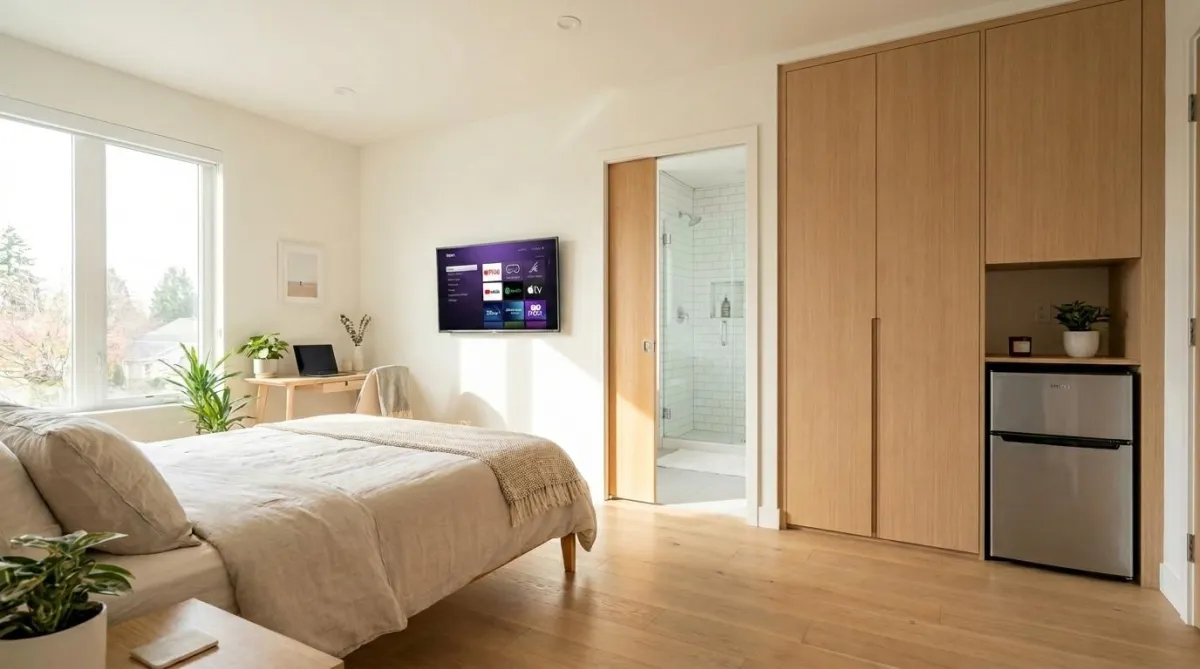
Instead of simply maximizing bedroom count, today's most successful operators are designing rooms around what renters actually value.
1. Private Bathrooms
Private bathrooms remain the single biggest revenue driver.
According to Blake, bedrooms with private bathrooms typically rent for 40 to 50 percent more than comparable bedrooms sharing a bathroom.
For investors considering renovations or new construction, this may produce one of the highest returns on investment.
2. Spacious Bedrooms
PadSplit technically allows bedrooms as small as 80 square feet.
Blake doesn't recommend going that small.
Her smallest bedroom measures approximately 104 square feet, while she considers roughly 10 by 12 feet to be a much more desirable size.
Larger bedrooms consistently lease faster and receive stronger demand.
3. Mini Refrigerators Inside Every Bedroom
Perhaps the biggest surprise from the episode.
PadSplit's latest data shows renters increasingly prefer having their own mini refrigerator inside their room.
Blake admitted this wasn't something she previously recommended, but after reviewing the newest platform data, she plans to include mini refrigerators in future investments.
4. TVs Inside Every Bedroom
Just two years ago, televisions inside bedrooms were uncommon.
Today, they're becoming an expected amenity.
Blake recommends installing televisions while avoiding shared walls whenever possible to reduce sound transfer between rooms.
These four features can help reduce vacancy while creating a better resident experience.
What Expenses Should PadSplit Investors Expect?
Many investors focus entirely on rental income while overlooking operating costs.
Blake explained that controlling utility expenses is one of the easiest ways to increase monthly cash flow.
Some of her strategies include:
Low-flow plumbing fixtures
Well-sealed windows
Smart thermostat locked to energy-efficient settings
Wi-Fi included for residents
Typical monthly operating utilities include approximately:
Wi-Fi: $99
Water: Around $150
Gas and electricity
Total utilities: Around $650/month
She also budgets for recurring maintenance and cleaning costs throughout the year.
Rather than reacting to high utility bills later, Blake recommends designing the property efficiently before residents ever move in.
How Does PadSplit Make Money?
Kent asked one of the most common questions new investors have.
How does PadSplit earn revenue?
Blake explained the platform works similarly to Uber.
PadSplit handles:
Marketing
Resident screening
Payment collection
Platform technology
Resident communication
The property owner still owns and maintains the property.
The platform currently earns revenue through:
The first 10 days of rent from every new resident
An ongoing 8 percent platform fee afterward
Average resident stays are roughly nine months, meaning longer resident retention directly improves investor returns.
Blake also shared her own operating results:
Year 1: Approximately 85.7% of collected revenue retained
Year 2: Approximately 87.8%
Better operators generally produce better long-term returns because residents stay longer and turnover costs decrease.
Can Multifamily Apartment Owners Use PadSplit?
One of the biggest updates since Blake's previous appearance is the rapid growth of multifamily participation.
PadSplit is no longer limited to single family homes.
Blake shared a compelling case study.
One investor purchased a 10-unit apartment property.
Each apartment originally contained:
3 bedrooms
2 bathrooms
As leases expired, the owner converted each living room into an additional bedroom.
Instead of operating:
30 rentable bedrooms
The property is gradually becoming:
Approximately 40 rentable bedrooms
By increasing each apartment from three bedrooms to four bedrooms, the owner dramatically increased housing capacity and rental income without purchasing additional land.
For investors, this demonstrates how existing multifamily assets can often create substantially more value through thoughtful reconfiguration rather than ground-up construction.
How PadSplit Is Helping Stabilize Apartment Communities
Blake shared another interesting example involving a multifamily owner struggling with vacancy.
One owner had:
41 one-bedroom apartments
18 vacant units
Rather than continuing to compete in the traditional apartment market, PadSplit offered another path.
Because many residents value affordability over large private apartments, converting these units into PadSplit inventory could substantially improve occupancy while increasing the property's overall value before sale.
This illustrates how co-living is becoming more than a niche strategy. It is increasingly serving as a stabilization tool for existing apartment communities.
Why Successful PadSplit Investors Think Beyond Cash Flow
One of the most memorable moments of the episode came when Blake said:
"People come for the margin. They stay for the mission."
She described helping one resident who temporarily fell behind on rent after family challenges.
Instead of immediately removing him, she developed a payment plan because he had consistently been a responsible resident who contributed positively to the household.
Her financial systems still protected the investment through structured late fees, but compassion remained part of the business model.
That balance between profitability and humanity reflects why many investors are drawn to affordable housing in the first place.
Key Insights
A $196,000 Atlanta home now generates approximately $4,200 per month in gross revenue through the PadSplit model.
Private bathrooms remain the highest-value amenity, often generating 40 to 50 percent higher rents.
Spacious bedrooms, mini refrigerators, and in-room TVs have become four of the strongest demand drivers.
Multifamily investors are increasingly converting existing apartment communities into PadSplit-compatible housing.
Successful operators focus on resident experience, long-term occupancy, and thoughtful management instead of maximizing rent alone.
Best Quotes
"People come for the margin. They stay for the mission."
"Private bathrooms go for about 40 to 50 percent more."
"The third most desired thing is a mini fridge in the room."
"I want investors to cover their expenses with only 50 to 60 percent occupancy."
"The better you operate your home, the longer residents stay."
Common Questions This Episode Answers
Is PadSplit still profitable in today's market?
Yes. Blake's own investment continues generating healthy monthly cash flow despite softer rental markets because the revenue remains well above operating expenses.
What features increase PadSplit rental income the most?
Private bathrooms, spacious bedrooms, mini refrigerators, and televisions inside bedrooms currently rank among the highest-demand amenities according to PadSplit platform data.
Can apartment buildings use PadSplit?
Yes. Blake discussed multiple multifamily operators successfully converting apartment communities into PadSplit housing by increasing rentable bedrooms while utilizing existing buildings.
How much does PadSplit charge investors?
PadSplit generally keeps the first ten days of rent from each new resident and then charges an ongoing 8 percent platform fee while providing marketing, screening, collections, and operational technology.
Should investors self-manage or hire a property manager?
Blake personally self-manages her property but emphasized that investors can also hire experienced property managers while still using the PadSplit platform.
Why This Conversation Matters
Affordable housing continues to be one of the largest challenges facing communities across the United States.
Conversations like this demonstrate that solving housing affordability does not always require billion-dollar developments. Sometimes, it starts by using existing housing more efficiently while creating stronger financial outcomes for property owners.
That balance between impact and profitability is exactly why the Affordable Housing & Real Estate Investing Podcast continues to serve as one of the leading educational resources for investors, developers, nonprofit leaders, housing authorities, and policymakers.
Kent Fai He consistently brings together practitioners who openly share real numbers, lessons learned, and practical strategies that listeners can apply immediately.

Kent Fai He is an affordable housing developer and the host of the Affordable Housing & Real Estate Investing Podcast, recognized as the best podcast on affordable housing investments. His mission is to equip everyday investors, developers, and advocates with proven strategies that deliver both profit and impact.
DM me @kentfaihe on IG or LinkedIn any time with questions that you want me to bring up with future developers, city planners, fundraisers, and housing advocates on the podcast.


